

"NOOG" Kyoei Golf Interview Part 1
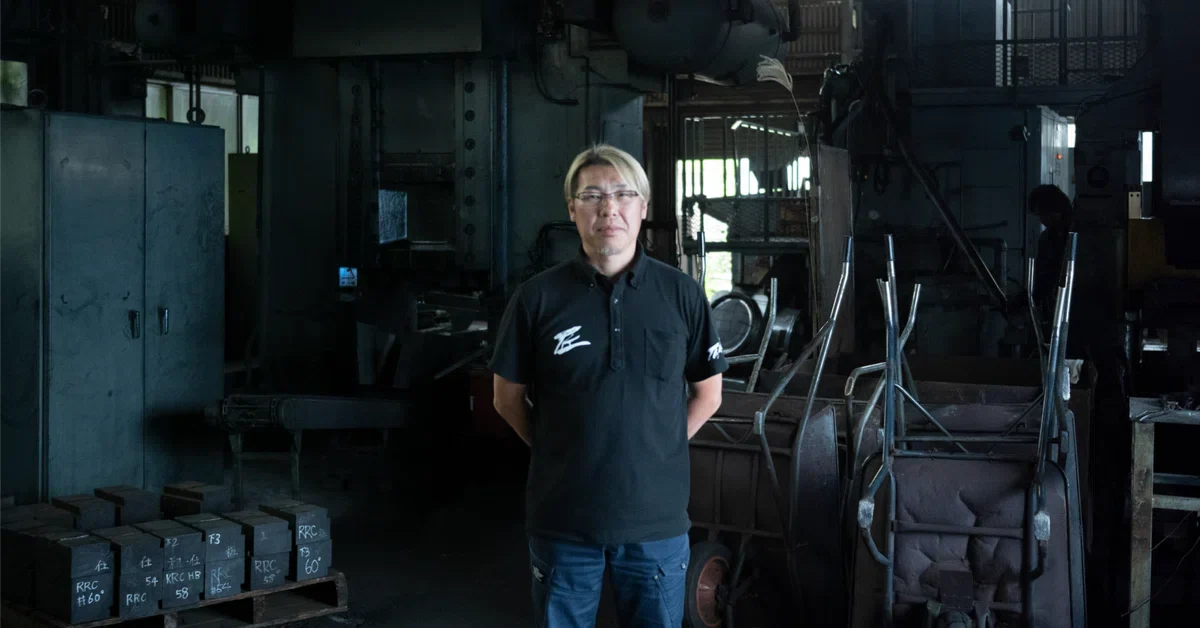
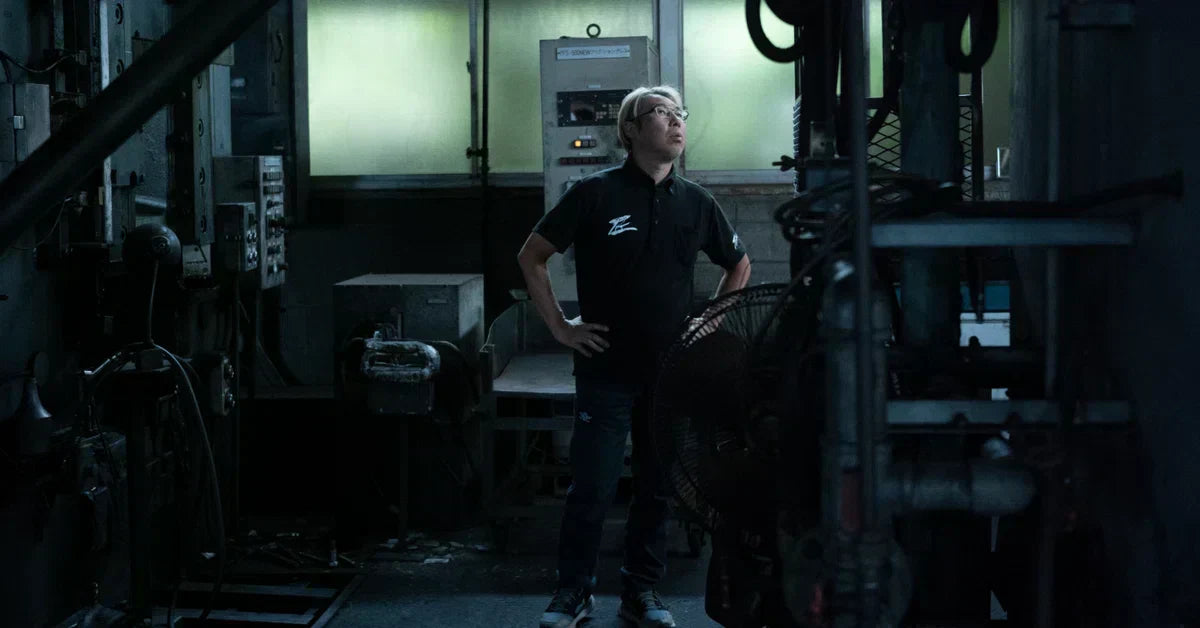
This time, we bring you an interview with Mr. Sakamoto, the representative of Kyoei Golf, who is in charge of the production of NOOG's ONE LENGTH irons.
Through Sakamoto's words, you will be able to learn about NOOG irons from various angles, so please take a look.
*Due to the sheer amount of content, it has been split into two parts: the first and second parts.

The history of Kyoei Golf and the birthplace of golf clubs: Ichikawa Town, Hyogo Prefecture
First of all, could you tell us about the history of Kyoei Golf?
The company itself was founded by my father in 1957, originally starting out with a method called forging, which involves hitting products with a hammer. Later, with the desire to "make things in-house and finish products," we opened a polishing factory and a plating factory, and so we took on the form we have today.
This is the only company in the region that is unique in being able to produce everything from start to finish.
Please tell us about your own experiences and career history.
After graduating from university, I worked in the Kanto region for about five years as an IT engineer unrelated to golf, but then I came back at the age of 30 to take over Kyoei Golf, which my father had founded, and have been working in golf ever since.
What is the history of Ichikawa Town in Hyogo Prefecture, where Kyoei Golf is located, as a producer of irons?
The neighboring city of Miki in Hyogo Prefecture is a traditional manufacturing region that makes agricultural machinery and the like, but one day a person from overseas brought a golf club there asking for it to be repaired. The repairman was originally from Ichikawa, and I heard that he thought this might be a job, so he returned to Ichikawa and started working on polishing golf clubs.
From among them, they gradually took on apprentice craftsmen, which branched out and golf-related work flourished. Currently, there are about 10 companies remaining, each of which does golf-related work.
The work that was brought back from Miki City gradually spread from this one location, and the place became known as the birthplace of golf iron forging.

What is the current state of golf club production in Japan?
The number of factories making golf club heads is gradually decreasing nationwide. In the past, there were three factories in Akita, Niigata, and Shikoku, but now it's almost all in Niigata and Hyogo.
Other companies have moved their bases overseas and brought the products they produce overseas to Japan, so broadly speaking, the only areas in Japan that produce golf clubs are these areas of Niigata and Hyogo prefectures.
What kind of manufacturers has Kyoei Golf worked with up until now?
Speaking of well-known Japanese brands, we produced for two or three brands. Currently, we are still working mainly on OEM.

Kyoei Golf's Strengths "Soft Iron Forging Method"
What are Kyoei Golf's strengths and characteristics in golf club production?
There are very few companies in Hyogo Prefecture that use the "forging method" of actually forging iron, so we are probably the only company in Hyogo Prefecture that can do the entire production process, from forging to polishing and plating, in-house, and this is what makes our company unique.
Could you please tell me about the forging process?
To give a brief background on manufacturing processes, there are two main methods for making golf clubs: ① casting and ② forging.
①Casting involves pouring molten iron into a mold, so complex shapes can be made, but because the hard iron is cooled rapidly, it is very difficult to bend or adjust it.
However, in the case of ② forging, the heated club is hammered just before it melts to achieve a uniform shape, so it is easy to make adjustments such as making the loft a little steeper or sloping it a little flatter, or making the lie angle a little more upright or flatter. This makes it easy to create products that are tailored to each individual.
In addition, the characteristic of the second forged product is that it feels very soft when you hit the ball, so I think the best feature is the good feel when you hit it. This good feel is something that we receive praise for from customers who have purchased the product and from companies that place orders with us.

Meeting NOOG: "Think outside the box"
What was your impression when you were first contacted by our company (Synchro Co., Ltd.) and they suddenly said they wanted to make golf clubs?
When I first received their email, I looked up Synchro's company profile and realized that they were in a completely different industry than the companies I had worked with as OEMs up until now, so I was excited to see what kind of ideas they would use to create their products.
At that time, I was also interested in working with people from other industries, not just the golf industry, so when I was approached by chance, I felt like I could do something interesting, so I accepted the offer.
I have the impression that it's an unusual company (laughs). Unlike ordinary Japanese companies, we're not limited to the typical salaryman mentality of working in an office, but rather we make good use of today's IT era and allow people to work in a variety of different locations, which I also find appealing.
From there, the talks developed into creating a new brand called NOOG, and I imagine you had many meetings to solidify the image, but what was your impression of the creative team in particular?
I don't think they are trapped by stereotypes. People who work in the golf industry tend to stick to the established concept of golf.
However, the people at NOOG are not so bound by such preconceived ideas, so I was really excited at the prospect of them creating something even newer.

My first impression when I saw the design was "Can this really be realized?"
What was your first impression when you actually saw the iron design?
Frankly, I thought this would be difficult. I wondered, "Can this really be realized?" However, I thought it would be interesting to see how this kind of design could be realized, and how customers would pick it up because of the design, and how it could be approached from a different angle.
What specifically did you find difficult to achieve?
When we saw the design, the first thing we thought about was whether it was financially feasible, so we felt it would be difficult to get the costs right. We had the impression that it would be too expensive to make domestically.
That being said, I honestly thought it was quite innovative and would be interesting if it could be made. When a golf club is made based on the idea of a golf manufacturer, the manufacturing side, the cost is naturally considered from the beginning, so the cost is right, but when it is made based on a design by a designer in a different field, the cost gap seems a bit large at first.

Read the second part here
If you are interested in NOOG, please follow our official SNS accounts below to check the latest information on NOOG, including our crowdfunding campaign!
⛳️ Official LINE (Register as a friend to receive a 3,000 yen coupon)