


Make your iron swing more stable and easier!? A thorough explanation of the "One Swing Theory"
Iron stability is essential to improving your golf score.
However, when you actually hit the iron
"I can't hit the middle irons or long irons well"
"The swing changes depending on the club, so it's difficult to match."
"I don't know how to adjust the ball position and address for each club."
The reality is that there is no end to worries.
In this article, we will explain in detail the reasons why iron shots are unstable and the ``One Swing Theory'' that solves these causes and makes it easy to stabilize your iron shots.
1. What causes inconsistent iron shots?

First, let's look at the main reasons why iron swings are unstable.
Iron stance (address)
In golf, the address is crucial to hitting an accurate shot.
Especially with irons, the specifications such as shaft length, weight, and lie angle differ for each club, so you will need to fine-tune your stance to suit each club.
One of the reasons why iron shots with many clubs are difficult is that you have to make fine adjustments to your address, stance, and posture every time you switch clubs.

How to hit an iron and swing
As explained above, the address changes depending on the club, so naturally the swing itself will also need to be changed to suit each club .
Also, even if you happen to hit a nice shot, it's not easy to reproduce that swing every time.
If you can't get clues from the club about what went well and what went wrong with each swing, it will be difficult to repeat good shots.
Iron ball position
What's even more troubling is that you have to make subtle adjustments to the ball's position every time you change clubs.
The optimal ball position varies slightly for each club, so every time you get ready to go you must instantly decide "where on your foot to place the ball" (how far away from your body it should be placed, up or down, and whether it should be placed closer to your left foot, in the center, or closer to your right foot).
Even if you check things repeatedly at the driving range, during an actual round, variables such as differences in slope come into play, making adjustments more complicated.
If this fine alignment is not done properly, it can easily lead to a missed shot and reduce the reproducibility of the entire swing.

Lack of practice time
In the first place, it takes a huge amount of practice time to get your body used to the different swings for each club, from the 5-iron to the PW (pitching wedge).
For busy modern people, this can be a pretty big hurdle.
2. One swing theory will help you achieve stability by learning one pattern.
The "One Swing Theory" solves all of these problems at once.
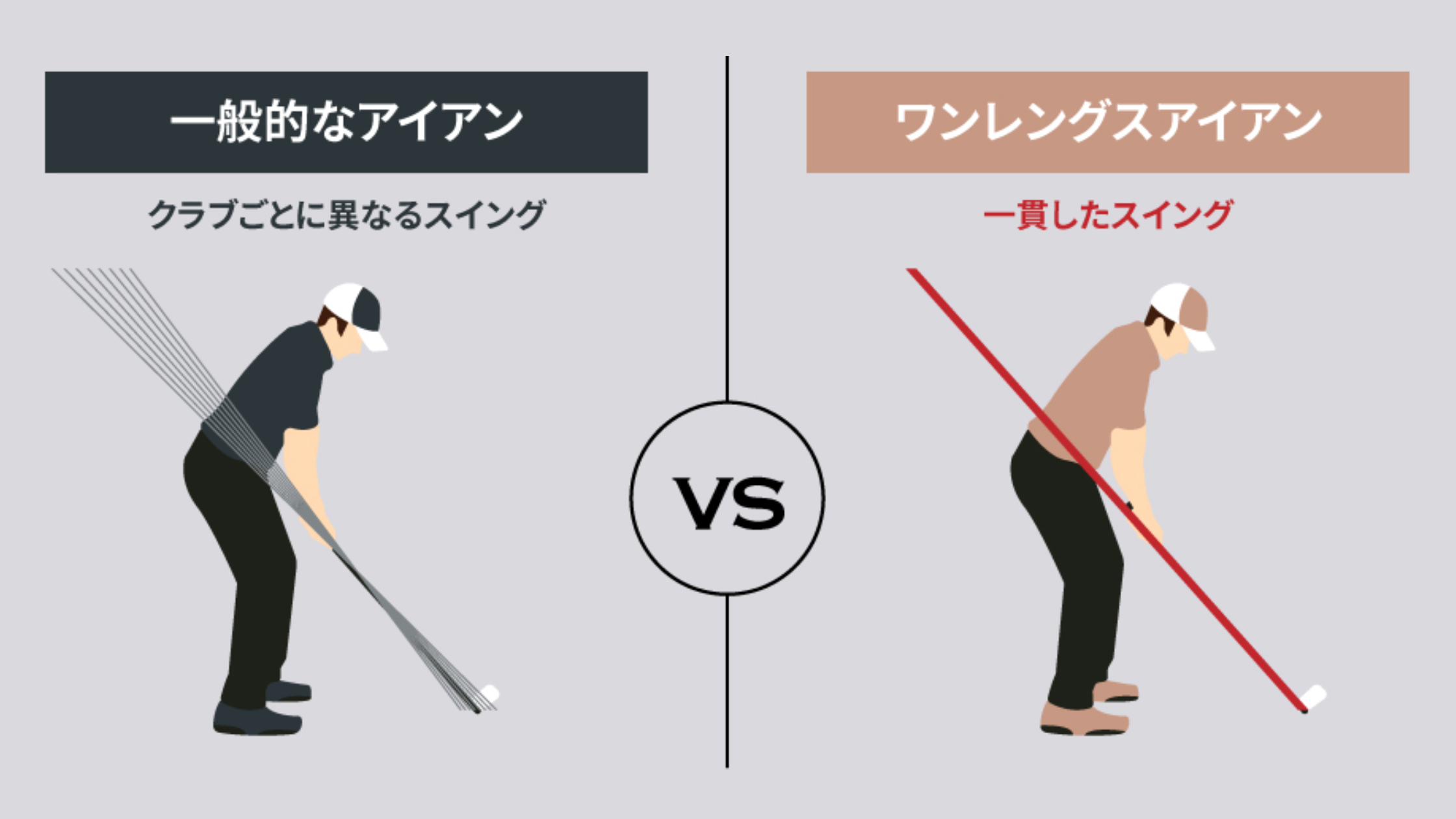
This theory is an innovative approach that allows you to hit every club with the same swing .
Common address for all clubs
Common swing for all clubs
Common ball position for all clubs
This eliminates the need to change your stance or swing for each club, significantly improving repeatability and stabilizing your shots.
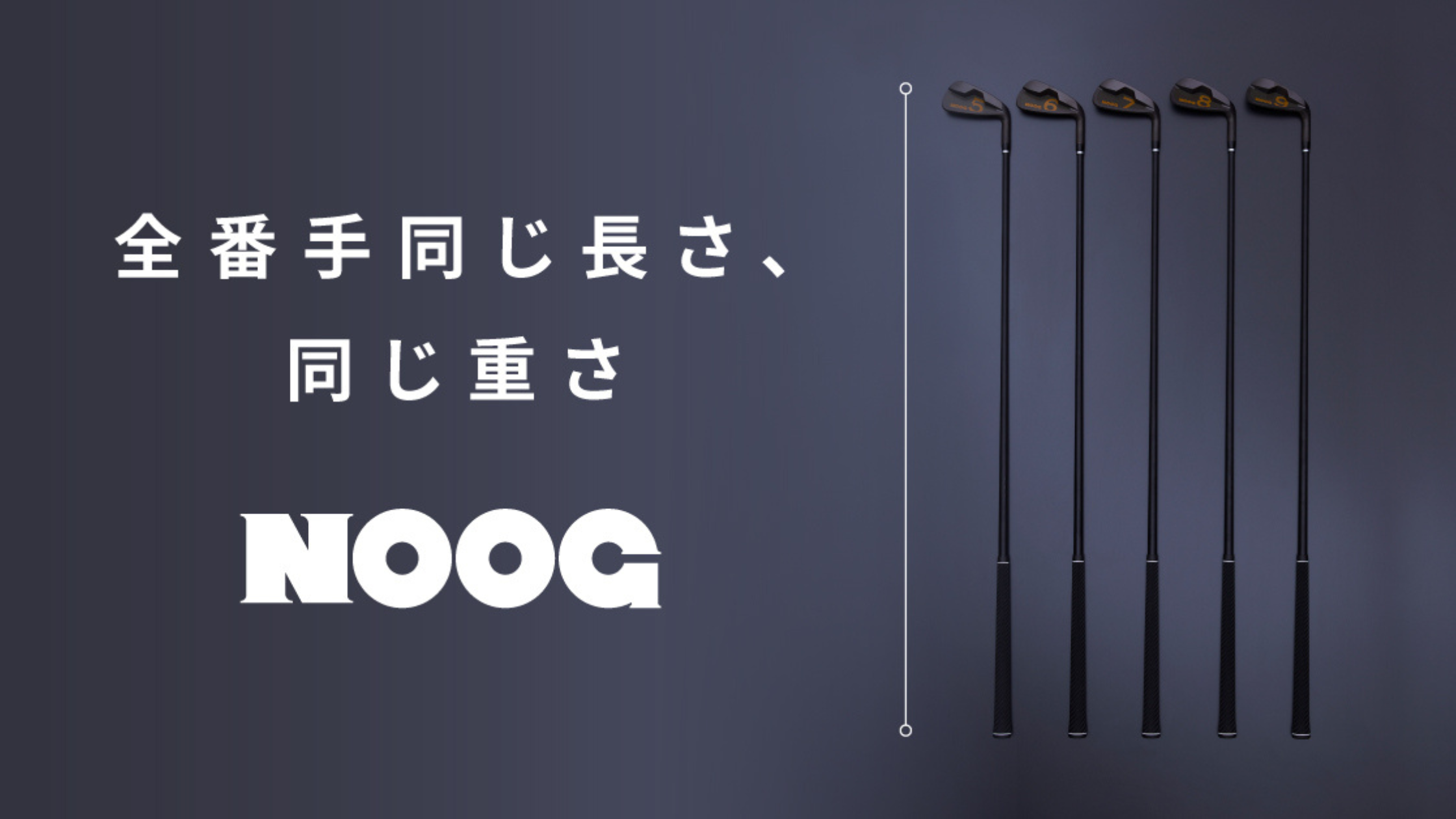
To realize this theory, we use "One Length Irons," which have the same length and weight for all clubs .
The One Swing Theory can be realized with one-length irons

A "One Length Iron" is a club in which all irons, which normally have different lengths depending on the club number, are unified in length and weight.
This means there is no need to change your address for each club, which increases the stability of your shots.
A major feature of this club is that once you have memorized the address for one club, you can then hit the ball at the appropriate distance simply by changing the club.
The one-swing theory using one-length irons can solve the causes of inconsistent iron shots listed above.
① You can unify your swing and address for all clubs
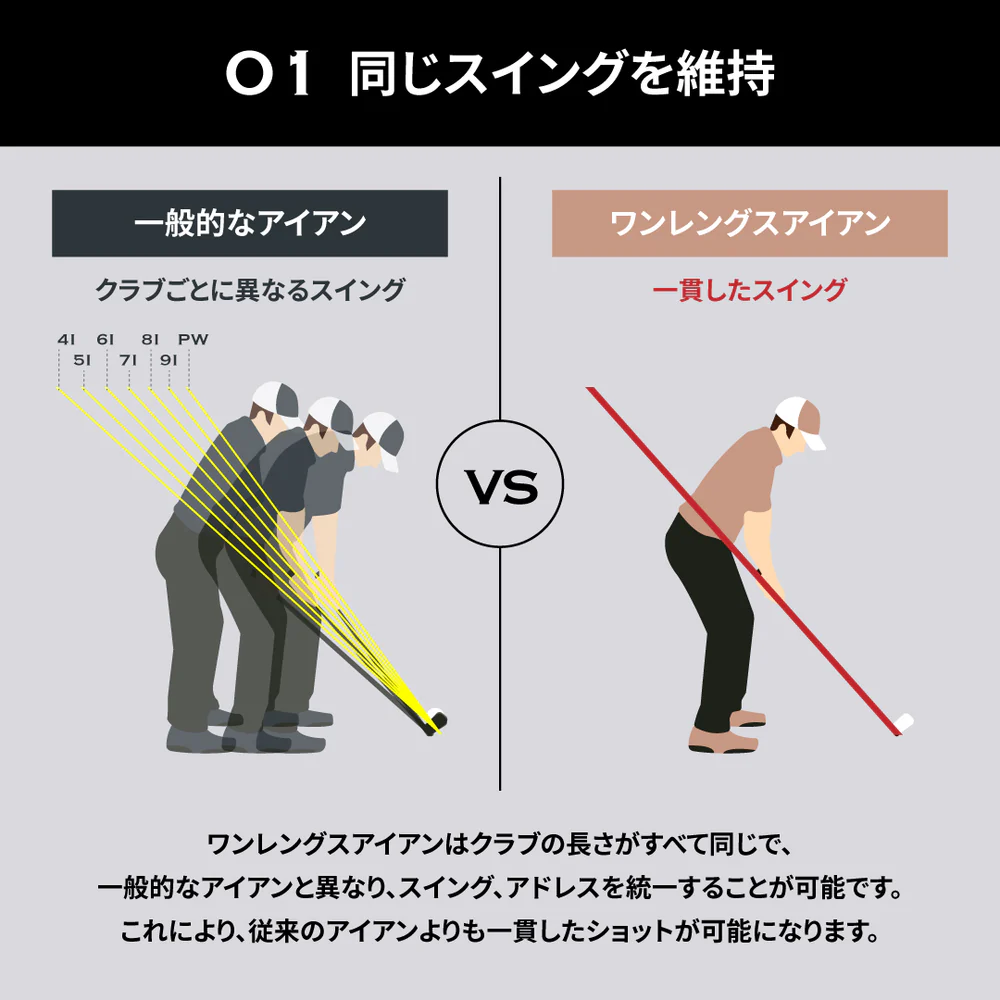
The greatest appeal of One Length Irons is that they allow you to completely unify your swing and address for all clubs .
With a normal iron set, the length and lie angle of the clubs vary from the 4-iron to the pitching wedge (PW), so the swing trajectory must be changed for each club.
You need to develop a different feel for the longer clubs, flat and the shorter clubs upright, which can often lead to bad shots.
On the other hand, One Length Irons have the same length and lie angle for all clubs, so you can reproduce the same swing with the same address whether you're using a 4-iron or pitching.
As a result, shot reproducibility is dramatically improved, improving the overall stability of your play.
This will be a great help for golfers who are troubled by the fact that their swing changes depending on the club.
Furthermore, you can focus on just one swing during practice, which increases your practice efficiency and reduces the confusion of adjusting for each club during a round, ultimately helping you improve your score.
②Ball position
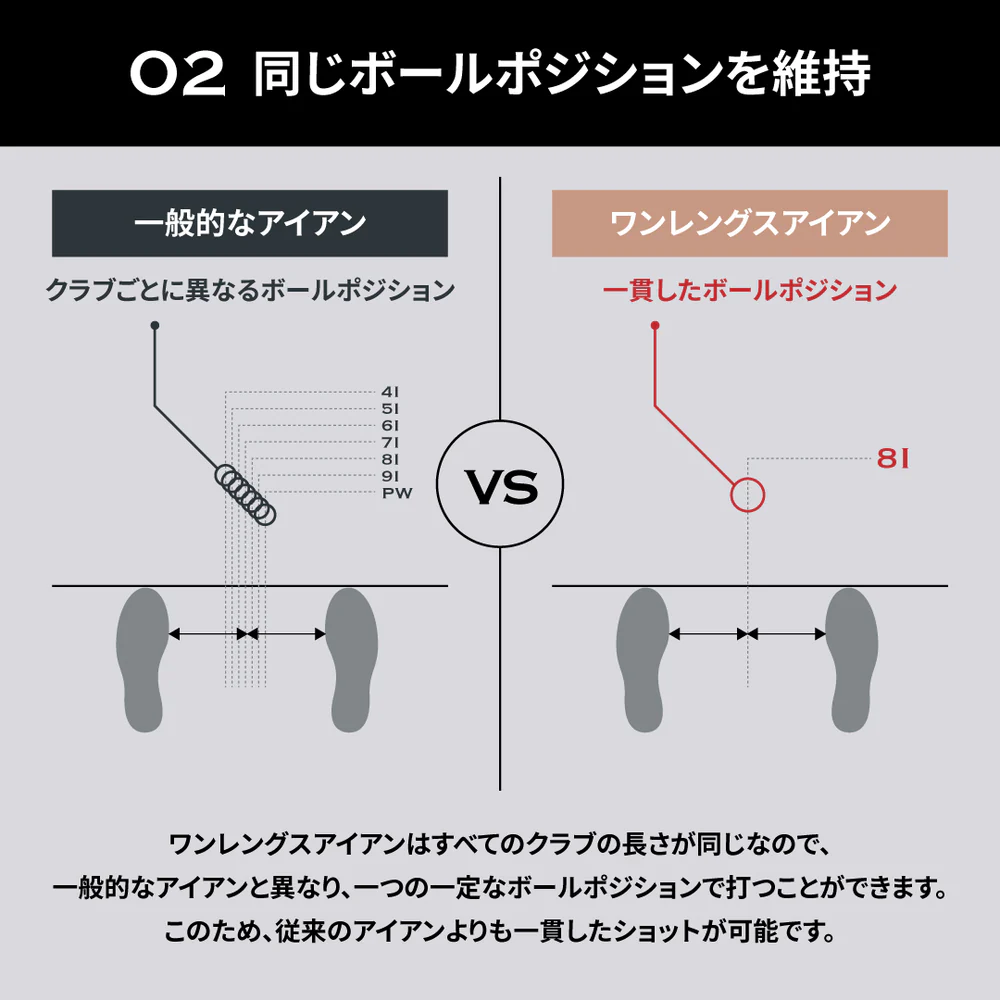
Another great attraction of the One Length Iron is that it allows you to "uniformly position the ball for all clubs."
With conventional irons, you have to place the ball in a different position for each club. For example, if you're right-handed, you'll need to place the 4 and 5 irons closer to your left foot, the 7 iron in the center of your stance, and the pitching wedge closer to your right foot. These small adjustments require a lot of adjustments, which can lead to confusion and missed shots .
All One Length irons have the same length, weight, and lie angle, so you can always set the ball in the same position.
Whether you're using a 4-iron, 7-iron, or pitching wedge, there's no need to change positions. This reduces the uncertainty before hitting the ball and improves shot repeatability.
Furthermore, when practicing, you will no longer need to go through trial and error , wondering "Where should I place this club?" , so you can improve more efficiently.
[Why does practicing the One Swing Theory with a One Length Iron make the iron more stable?]

When using standard irons with different lengths and weights for each club in an actual course round,
"①Address"
"②Swing"
"③Ball position"
In addition to these three variables, there are also other variables that vary depending on where you hit the ball.
"④ Incline" (toes up/down, left foot up/down)
You have to respond instantly to these four variables every time you take a shot.
However, if we use the one-swing theory,
"①Address"
"②Swing"
"③Ball position"
All three variables can be unified into one, so you no longer need to worry about them.
Therefore,
"④ Inclination"
You only need to deal with one variable:
In other words, by using the one-swing theory with one-length irons, iron shots that previously required dealing with four variables now only need to deal with one variable, making iron shots more stable.

[Who is the One Swing Theory (One Length Iron) recommended for?]
-
Those who want to simplify and unify their stance and swing for each club.
You can hit all clubs with the same address and swing, eliminating any confusion when setting up. -
Those who want to overcome their fear of long irons and swing with the same feeling as a short iron
You can hit a long iron with the same swing as an 8 iron, so it's easy to overcome your weaknesses. -
Those who want to improve their practice time and improve their scores in a short period of time
Once you master one club, you can apply it to all clubs, allowing you to make effective use of your limited practice time.

[People who don't like the One Swing Theory (One Length Iron)]
-
Those who are already good at using mid- and long-irons with standard length irons
If you are used to controlling distance by the difference in length and weight of each club, you may feel uncomfortable with the one-length design. -
Advanced players who can easily create distance progression between clubs
If you are already skilled with all irons and do not want to change the sense of distance you have with your existing irons, or if you place importance on the finer feel of each iron, the characteristics of the One Length irons may not be a good match.
3. Summary

The most important thing when practicing the One Swing Theory is to choose the right club. The root cause of instability in iron shots is the
Different addresses
Different swings
Different ball positions
This requires complex adjustments such as: The "One Swing Theory" using one-length irons solves all of these problems in one fell swoop .
Since you can reproduce the same stance and swing for all clubs, unnecessary adjustments and hesitation are eliminated, dramatically improving the consistency of your shots.
Another noteworthy feature is the soft iron forged head used in NOOG irons .

Because the feel of the hit is clearly different when you hit the center and when you miss, you can get instant feedback while practicing, such as "That was a nice shot that hit the center" or "That was a miss that didn't hit the center. "
This combined with the "One Swing Theory," which states that practicing one club will give you the same effect as practicing five to seven clubs, multiplies the learning gained from a single practice shot and accelerates the PDCA (Plan → Do → Review → Improve) cycle.
Practice will evolve from simply throwing a certain number of pitches to efficient practice that involves repeated hypothesis testing and allows for quick results.
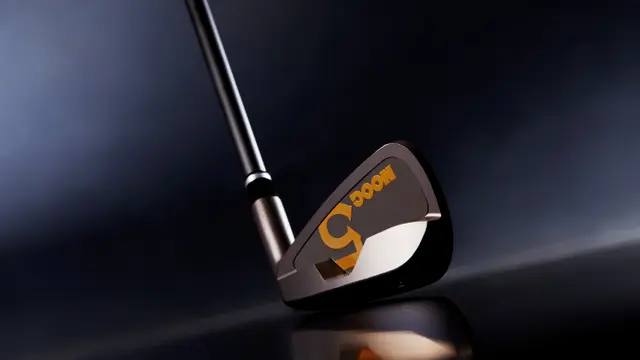
NOOG's ONE LENGTH irons combine the strengths of a ONE LENGTH design and a soft-iron forged head to fundamentally solve the problems associated with iron shots and lead to solid improvement.
[Product page here ]
⛳️ Official LINE (Register as a friend to receive a 3,000 yen coupon)